


Everything You Need to Know Before Traveling with Your Pet
Traveling with your dog or cat is genuinely one of life's better decisions, until it isn't. The difference between a trip that goes smoothly and one that ends in panic at a rest stop (or worse, at a foreign airport) usually comes down to preparation. And not the vague kind of preparation where you Google "can I fly with my dog" the night before departure.
This guide is for pet owners who want real, specific information: what paperwork you actually need, how airlines differ in ways that matter, what to pack beyond the obvious, and why having pet insurance before any of this happens is one of the smartest moves you can make.
Start earlier than you think
The most common mistake pet owners make when planning travel is treating their pet's needs as an afterthought. Booking flights, hotels, and car rentals first, then scrambling to figure out the pet situation. That's where things go sideways.
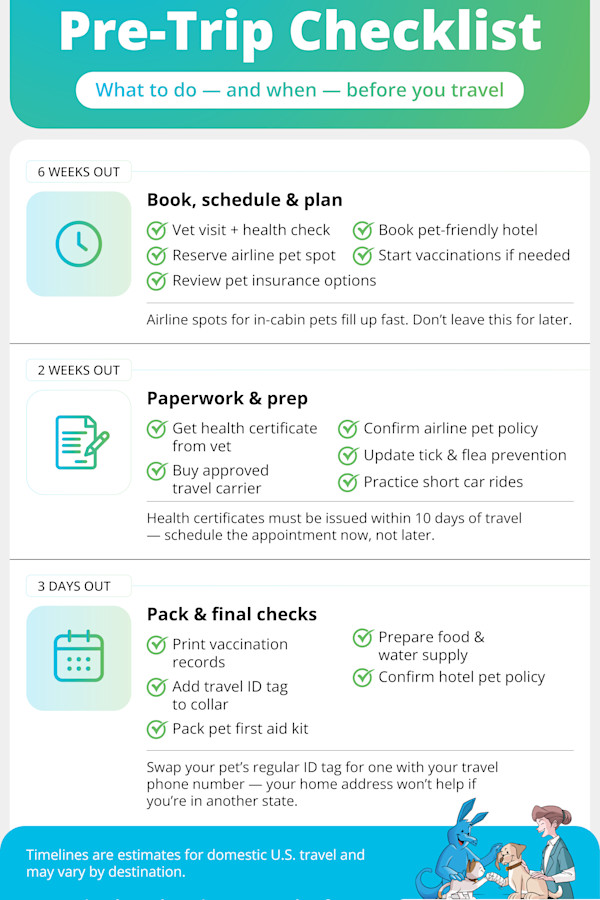
A good rule of thumb: start preparing at least four to six weeks before your trip. For international travel, make it three months. Here's why that timeline matters:
Why the timeline matters: Some required tests like a rabies titer test for international travel take time to process at the lab. A health certificate from your vet must typically be issued within 10 days of travel, but you'll want to schedule that appointment well in advance. Airline spots for in-cabin pets are limited and often fill up. Hotels with quality pet policies get booked out. None of this works on a last-minute timeline.
Your vet is your first call. Let them know your destination, your travel dates, and your mode of transport. They'll help you identify any vaccinations your pet needs to be current on, whether a health certificate is required, and whether your pet is physically ready to travel. For older dogs and cats or those with health conditions, this conversation is especially important.

Flying with your pet: what the airlines actually require
There's no universal "airline pet policy." Each carrier sets its own rules, and they vary more than most people realize. What applies to Delta doesn't necessarily apply to Southwest, and what worked last year may have changed.
In-cabin vs. Cargo: know the difference
Small dogs and cats (generally under 15–20 lbs, depending on the airline) can often travel in the cabin in an approved soft-sided carrier that fits under the seat. Larger dogs typically fly as checked baggage or through a separate cargo service. Some airlines, including American Airlines, have suspended checked pet service for the general public, limiting it to active military and Foreign Service personnel.
Flying pets in cargo is a decision worth making carefully. Summer heat is a real concern: several major carriers won't accept pets as checked baggage between May and September because of high temperatures in cargo holds. If your dog is too big for cabin travel, a cargo-specific pet shipping service may be safer and better suited than treating it as an afterthought on a passenger flight.
Breed restrictions are real: Brachycephalic (flat-faced) breeds, including bulldogs, pugs, Persian cats, and Boston terriers, face restrictions or outright bans on many airlines due to respiratory risks at altitude. If you have one of these breeds, check the specific airline policy before booking anything. This is not a negotiable exception.
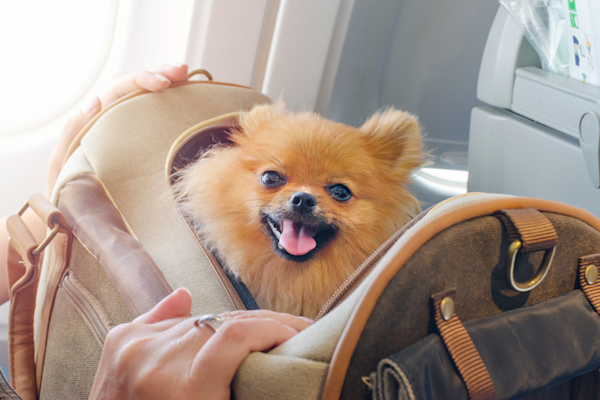
The paperwork airlines require
At minimum, expect to provide a veterinary health certificate issued within 10 days of travel. Most airlines require proof that your pet is up to date on rabies vaccination. If your dog has traveled to or from a country that the CDC classifies as high-risk for dog rabies within the past six months, additional documentation, including a CDC-endorsed form completed by a USDA-accredited vet, will be required before boarding.
Call the airline directly after booking, confirm the pet policy hasn't changed, and get everything in writing. Airline websites aren't always up to date.
Road trips: the more forgiving option (if you plan it right)
For most domestic travel with dogs or cats, driving remains the most flexible and lowest-stress option. You control the pace, the stops, and the environment. But "flexible" doesn't mean "unplanned."
-Desensitize before the trip. If your pet only rides in the car for vet visits, they've learned to associate car travel with something unpleasant. Take short practice drives to neutral or positive destinations — a park, a friend's house — in the weeks leading up to your trip.
-Use a crash-tested restraint. An unsecured dog in a moving vehicle is a safety hazard for everyone. Crash-tested harnesses and travel crates are significantly safer than letting your pet roam free. Look for products that have been independently tested, not just marketed as "safe."
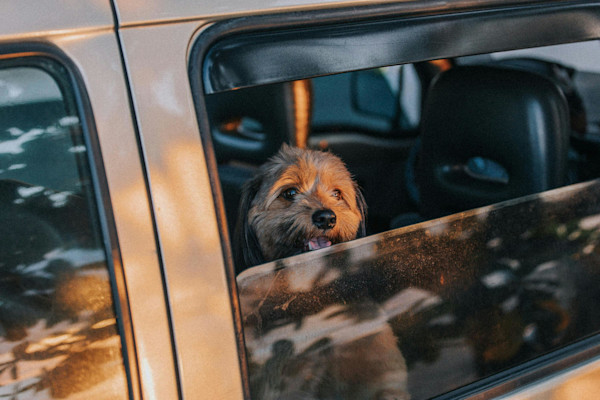
-Plan stops every 2–3 hours. Dogs need bathroom breaks, water, and movement. Cats can tolerate longer stretches but still need access to water and a chance to stretch. Never leave your pet in a parked car in warm weather — temperatures rise faster than most people realize.
-Keep their diet consistent. Travel stress already disrupts your pet's digestion. Switching to a new food mid-trip makes it worse. Bring enough of their regular food to last the entire trip and maintain their usual feeding schedule as closely as possible.
Finding hotels that actually welcome pets
"Pet-friendly" is a spectrum. Some hotels charge a $150 pet fee and restrict your dog to a single designated room. Others, like La Quinta and Motel 6, have nationwide policies with no size limits and no extra charge. Premium chains like Kimpton Hotels take it further, with no breed or size restrictions and actual amenities for your pet.
A few things to always confirm before booking:
-Whether there's a weight or size limit (many hotels cap at 25–50 lbs)
-The exact pet fee: some charge per night, some per stay, some have refundable deposits
-Whether pets can be left unattended in the room (many don't allow this)
-Whether pet-friendly rooms are limited and need to be requested at booking
Apps like BringFido and websites like PetsWelcome.com let you filter specifically for pet policies and map out stops along a route — genuinely useful tools for multi-day road trips.
Always travel with your pet's vaccination records. Some hotels require proof before check-in, and if your pet needs emergency vet care on the road, that paperwork can save critical time.
What to pack beyond food and a leash
Most pet owners nail the basics. What tends to get forgotten are the things you only wish you had:
- Vaccination and health records. Printed copies, not just on your phone
- A familiar-smelling blanket or item from home helps anxious pets settle in unfamiliar spaces
- Collapsible travel bowls. Easier to pack, just as functional
- Pet first aid kit. Gauze, antiseptic wipes, tweezers for ticks, and your vet's after-hours number
- Your pet insurance policy details. If you have coverage, keep the card or app accessible
- Extra ID tags with your travel phone number. Your home address doesn't help if you're in another state
- Any prescription medications with enough supply to cover delays
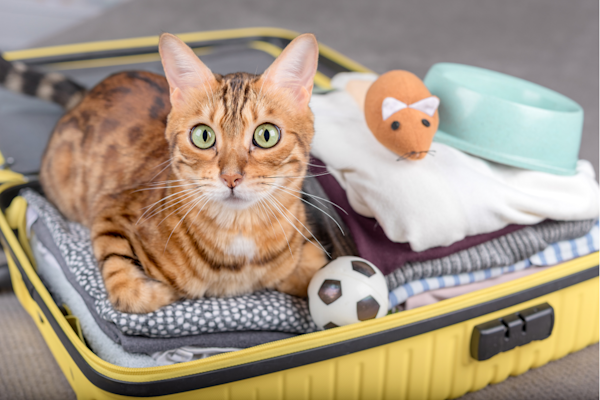
- For cats specifically: bring their litter box or a portable travel version. An unfamiliar litter box in a strange environment is already stressful enough. Keeping their usual litter reduces the chance of accidents.
Health risks you might not have thought about
Travel exposes pets to environments they're not used to new climates, different parasites, unfamiliar terrain. A few specific things worth knowing:
Ticks and regional parasites
If you're traveling from the Southwest to the Southeast, or from urban to rural environments, the tick species and parasite exposure your dog faces will be different from what they encounter at home. Talk to your vet about whether your current heartworm, flea, and tick prevention is appropriate for your destination. Some preventatives aren't effective against all regional tick species.
Water safety
Letting your dog drink from lakes, streams, or standing water is a real health risk. Leptospirosis, giardia, and blue-green algae (which can be toxic) are all legitimate concerns in natural water sources. Bring enough fresh water for the trip and carry a portable bowl.
Heat and cold
Dogs and cats don't regulate body temperature the same way humans do. A short-coated dog visiting cold mountain terrain needs different gear than a husky in the Florida Keys. Research the climate at your destination and plan accordingly — whether that's dog booties, a cooling vest, or simply adjusting the timing of outdoor activities to avoid the heat of the day.
When to see a vet on the road: Signs that warrant an immediate vet visit while traveling: labored or rapid breathing, vomiting more than twice in a short period, lethargy that's out of character, signs of heatstroke (excessive panting, drooling, glazed eyes), limping, or any wound that isn't minor. Don't wait to see if it resolves itself. Use the ASPCA's online vet locator or apps like Pawp to find the nearest emergency vet at your location.
Why pet insurance matters more when you travel
At home, you have established relationships with your vet, you know where the nearest emergency clinic is, and you have some sense of what things cost. On the road, all of that disappears. You're dealing with unfamiliar vets, unknown pricing, and potentially limited options in rural or remote areas.
Emergency vet visits average between $800 and $2,500 depending on what's needed. Surgery or overnight stay can run significantly higher. These aren't scary statistics; they're the real cost of a weekend trip that takes an unexpected turn.
If your pet is young, the first year is often front-loaded with shots and checkups, which can make expenses feel higher than expected. Some pet insurance plans offer wellness add-ons that help spread these routine costs into predictable monthly payments. This makes budgeting easier and helps ensure your pet stays up to date on preventive care before trips, boarding stays, or outdoor adventures.
Even with good preparation, unexpected vet visits can still happen while traveling or exploring new places. Having pet insurance in place helps you manage those situations without worrying about the cost. And because not all providers offer the same coverage, comparing options is one of the smartest steps you can take before choosing a plan.
On AARDY.com, you simply enter basic details like your pet's age, breed, and location. Within seconds, you can see side-by-side quotes from multiple insurers, making it easier to compare coverage, costs, and key features in one place.
Taking a few minutes to compare options can help you find the right protection for your pet and avoid unexpected expenses down the road.
Need a quote for pet insurance? Fill out the form at the top of this page.
This article has been written for review purposes only and does not suggest sponsorship or endorsement of AARDY by the trademark owner.
Recent AARDY Travel Insurance Customer Reviews

customer

helpful customer service agents and…
helpful customer service agents and calls that are promptly answered
customer
Jennifer was very helpful answering…
Jennifer was very helpful answering numerous questions.
Scott
Rep-Clearly explained the different…
Rep-Clearly explained the different policies and assisted me in choosing the right one.